
A Hino 195 is built to handle demanding commercial work, but worn steering components can affect its safety, handling, and tire life. One component that deserves close attention is the tie rod end.
Tie rod ends connect the steering linkage to the front wheels, allowing the wheels to respond when the driver turns the steering wheel. As these joints wear, drivers may notice looseness, unusual noises, poor alignment, or changes in how the truck handles.
Understanding the warning signs can help you address the problem before it causes additional damage.
What Does a Tie Rod End Do?
The tie rod end is part of the Hino 195’s steering system. It transfers movement from the steering linkage to the steering knuckle, helping the front wheels turn in the correct direction.
Each tie rod end contains a movable joint that must remain secure while still allowing the steering system to move. Over time, regular use, heavy loads, road debris, moisture, and damaged protective boots can cause the joint to wear.
When a tie rod end becomes loose, steering accuracy may decrease and front-end alignment can be affected.
Common Signs of a Worn Hino 195 Tie Rod End
A worn tie rod end may produce one or more of the following symptoms.
Loose or Wandering Steering
The truck may feel less responsive or require frequent steering corrections, especially at highway speeds. The steering wheel may also feel loose before the front wheels begin to react.
Uneven Front-Tire Wear
A worn tie rod end can affect the toe alignment of the front wheels. This may cause the inner or outer edges of the tires to wear faster than the rest of the tread.
Uneven wear should be investigated promptly, as commercial truck tires can be expensive to replace.
Clunking or Knocking Sounds
A loose joint may create a clunking or knocking sound when turning, driving over bumps, or moving through uneven road surfaces.
Noise alone does not confirm a failed tie rod end, but it is a reason to inspect the steering and suspension system.
Steering-Wheel Vibration
Excess movement in the steering linkage can sometimes produce vibration through the steering wheel. The vibration may become more noticeable at certain speeds or on rough roads.
Difficulty Maintaining Alignment
If the truck repeatedly goes out of alignment, worn steering components may be contributing to the problem. An alignment cannot remain accurate when a tie rod end has excessive play.
Why Tie Rod End Wear Should Not Be Ignored
A worn tie rod end can affect more than steering comfort. Continued operation may lead to:
- Reduced steering control
- Accelerated tire wear
- Poor wheel alignment
- Additional stress on related steering components
- Unpredictable handling during braking or cornering
Because the tie rod end is a steering component, it should be inspected as soon as symptoms appear.
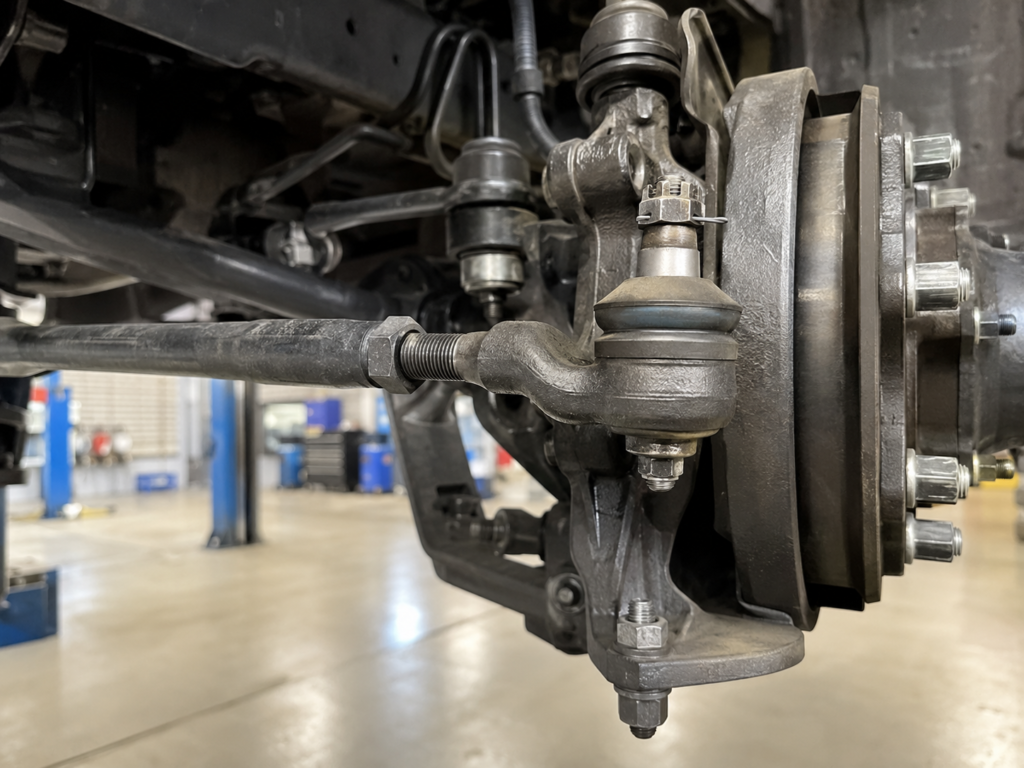
How to Inspect a Hino 195 Tie Rod End
Tie rod end inspections should be completed by a qualified technician using proper lifting and safety equipment.
During an inspection, the technician may:
- Raise and safely support the front of the truck.
- Check the front wheels for side-to-side movement.
- Observe the tie rod ends while the steering linkage is moved.
- Check for excessive play in the joint.
- Inspect the protective dust boot for cracks, tears, or missing grease.
- Look for bent, loose, corroded, or damaged steering components.
A damaged dust boot can allow dirt and moisture to enter the joint. Even when the tie rod end does not yet feel loose, a torn boot may indicate that replacement will soon be necessary.
Tie Rod End or Another Steering Problem?
Several front-end problems can create similar symptoms. Loose steering, vibration, tire wear, or clunking may also be related to:
- Drag-link ends
- Wheel bearings
- Kingpins
- Steering gear play
- Worn bushings
- Damaged steering linkage
- Incorrect tire pressure
- Wheel alignment issues
A complete front-end inspection helps identify the actual source of the problem and prevents unnecessary part replacement.
What to Consider When Buying a Hino 195 Tie Rod End
Commercial truck parts may vary by model year, steering configuration, production date, and VIN. Before ordering a replacement tie rod end, confirm:
- The truck’s exact year and model
- The vehicle identification number
- The location of the part
- The original equipment part number
- Left-side or right-side fitment, when applicable
- Any superseded or updated part numbers
Do not select a replacement based only on appearance. Two tie rod ends may look similar while using different stud sizes, tapers, threads, or dimensions.
Is a Wheel Alignment Needed After Replacement?
Yes. A front-wheel alignment should normally be performed after replacing a tie rod end.
Removing or adjusting the tie rod can change the truck’s toe setting. Driving without correcting the alignment may result in poor handling and rapid tire wear, even when the new part has been installed correctly.
The technician should also inspect the remaining steering components before completing the alignment. Replacing one worn component will not correct looseness elsewhere in the system.
Should Tie Rod Ends Be Replaced in Pairs?
Tie rod ends do not always need to be replaced in pairs. However, both sides should be inspected.
If one tie rod end has failed because of age, mileage, or operating conditions, the opposite side may have experienced similar wear. Replacing both may reduce future downtime when both components are near the end of their service life.
The decision should be based on inspection results and the truck’s maintenance history.
Help Protect Your Hino 195’s Steering and Tires
A worn tie rod end can begin with minor steering looseness and eventually lead to poor handling, alignment problems, and unnecessary tire costs.
Inspect the steering system when you notice wandering, clunking, vibration, or uneven tire wear. Early replacement can help restore steering response and keep your Hino 195 operating reliably.
Shop for Tie Rod End
Find the replacement steering components you need for your truck. Confirm fitment using your model year, VIN, and original part number before placing your order.