Squealing brakes after a pad replacement may not be a problem, but are always a symptom of something the new pads are revealing, not causing — a worn rotor, a lazy caliper, or reused hardware. This guide walks through how squeal is generated, then gives you a step-by-step troubleshooting sequence to isolate the real cause on Hino, Isuzu, and other medium-duty trucks.
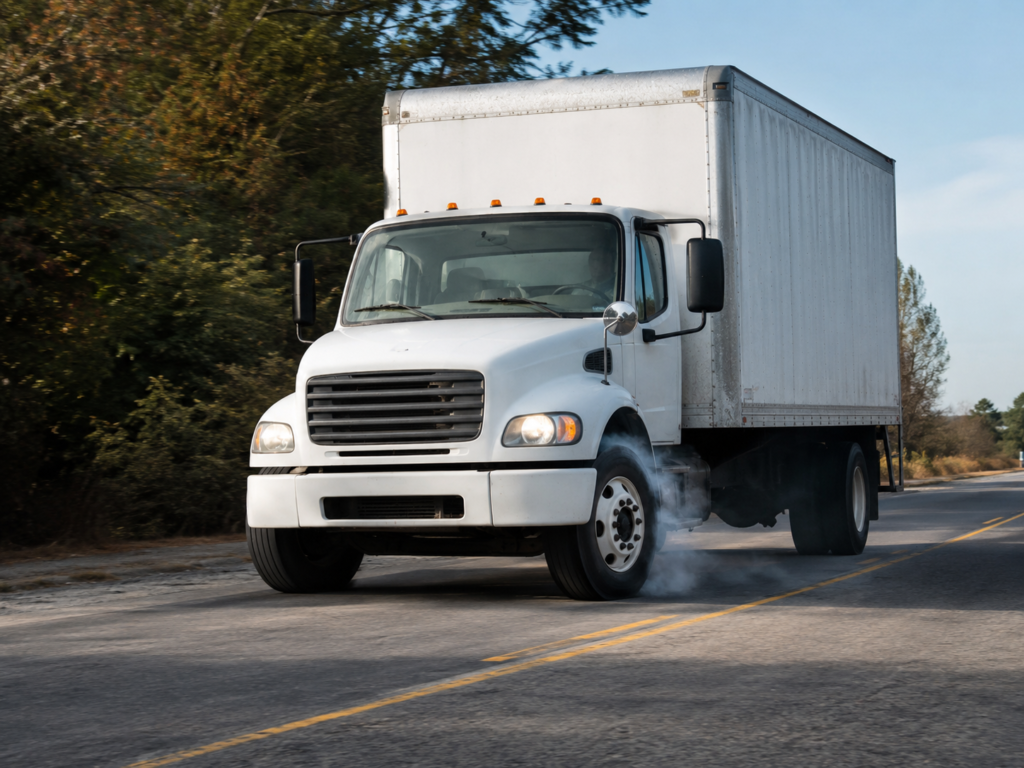
First, Understand What Squeal Actually Is
Brake squeal is a vibration problem, not a pad-quality problem.
When you apply the brakes, the pad presses against the rotor. If that contact pressure were perfectly strong and uniform across the whole pad face, there’d be no noise. In reality it never is — uneven contact makes the pad vibrate against the rotor at a natural frequency. The vibration itself is tiny, but the rotor is a large, rigid steel disc, and it acts like a speaker: it picks up the vibration and amplifies it into audible squeal. In bad cases the vibration travels further — into the caliper, suspension, and frame — showing up as groaning, judder, or noise the driver feels through the whole cab.
A healthy brake system dampens that vibration in three places:
- The pad friction material — the compound has built-in damping characteristics
- The rotor — a flat, true rotor lets the pad seat fully and dampens rather than amplifies
- The shims and hardware between the pad backing plate and the piston, which isolate vibration before it reaches the caliper
Squeal means one of those three damping paths has failed. Troubleshooting is simply figuring out which one. Work through the steps below in order — they’re sequenced from most common cause to least, and from easiest to check to hardest.
Step 1: Inspect the Rotor Edge for a Lip
What to look for: Run a fingernail from the centre of the rotor face outward to the edge. A worn rotor develops a raised ridge — a lip — at the outer edge (and sometimes the inner edge) where the old pad didn’t sweep.
Why it causes squeal: The old pads never made noise because they had worn to match this rotor’s exact profile, ridge and all — like two gears lapped into each other over tens of thousands of kilometres. Your new pad has a perfectly flat face. Press a flat pad against a rotor with a sharp raised edge and only that narrow ridge makes contact — the pad is effectively being scratched along a thin line, like a nail dragged across the surface. That concentrated line contact is a vibration generator, and the rotor amplifies it.
Why it’s serious on a truck: If only a thin band of the pad is touching the rotor, you’ve lost most of your braking surface. At 18,000–33,000 lbs GVW that means longer stopping distances, and the small contact patch overheats and glazes quickly.
The fix: Machine the rotor to remove the lip — or replace it if machining would take it below minimum thickness. On commercial trucks, where rotors run hot and wear fast, replacement is usually the better call once machining cost and downtime are factored in.
If you found a lip, stop here — you’ve almost certainly found your squeal. If the edge is clean, continue.
Step 2: Inspect the Rotor Face for Deposits and Steps
What to look for: Examine the rotor’s friction surface under good light. Two conditions matter:
- Friction material deposits — dull, dark, or blotchy patches where the old pad transferred compound onto the rotor face
- Steps or grooves — visible ridges of uneven wear across the face
Why they cause squeal: Either condition prevents the new pad from seating flush. With deposits, the pad drags on the raised patches of transferred material instead of the iron itself — pad-on-deposit has different friction characteristics than pad-on-iron, and the uneven grip generates vibration. With steps, the pad physically can’t make full-face contact; wherever there’s a gap, there’s room for the pad to vibrate.
The fix: Same as Step 1 — resurface or replace. A new pad should never go on a glazed, deposited, or stepped rotor. In the field, the pattern is remarkably consistent: replacing pads alone doesn’t stop this squeal; machining or replacing the rotor virtually always does.
Key diagnostic principle from Steps 1 and 2: “The old pads never squealed” is not evidence the new pads are defective. The old pads were worn to fit a worn rotor. The new pads are exposing the rotor’s condition, not causing the noise.
Step 3: Check the Hardware and Shims
What to look for: Were the shims, anti-rattle clips, and abutment hardware replaced along with the pads — or reused? Are the shims present, seated correctly, and undamaged?
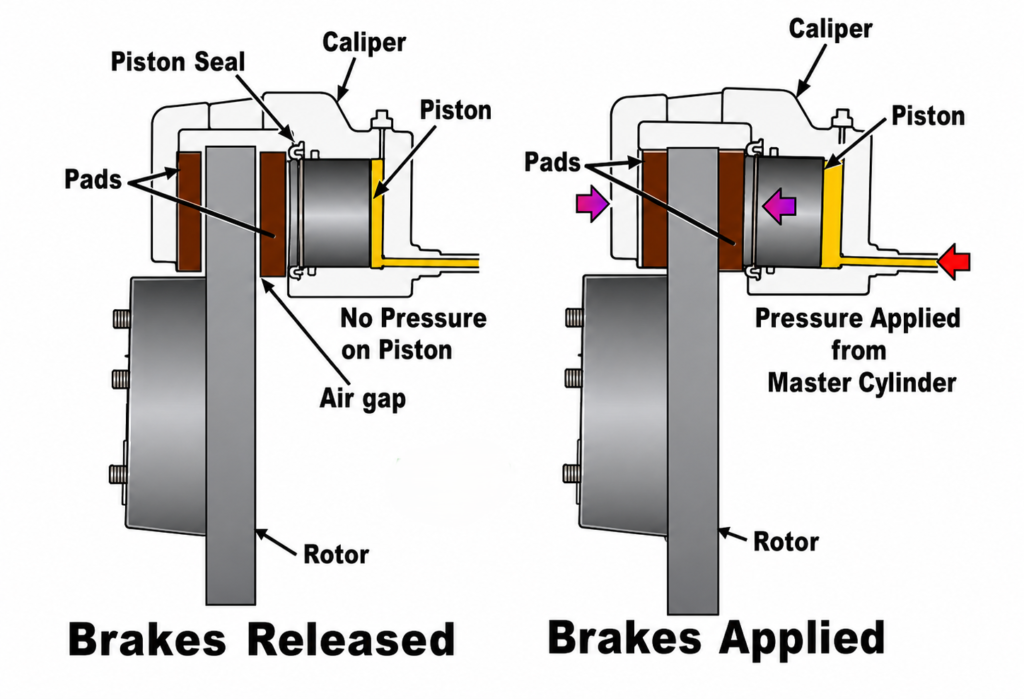
Why it causes squeal: The shim between the pad backing plate and the piston is one of the three damping paths. Old, flattened, corroded, or missing shims transmit pad vibration straight into the caliper instead of absorbing it.
The fix: Install the new hardware kit. If pads were installed without one, add it now — it’s the cheapest item on this entire list.
Step 4: Test Caliper Piston Retraction (Hydraulic Brakes)
This is the most overlooked cause on the list. Rotors get at least a glance during a brake job; caliper internals almost never do.
What to look for: Check that each piston retracts freely and that the dust boots and visible seal areas are intact and pliable, not hardened or cracked. After a road test, check wheel-end temperatures — a dragging caliper runs noticeably hotter than its pair on the other side.
Why it causes squeal: The piston is held in its bore by a square-cut seal, and that seal does more than hold fluid. Its elasticity is what retracts the piston when you release the pedal, pulling the pad off the rotor. As the seal hardens with age and heat cycles:
- The pad drags. The seal can’t pull the piston back, so the pad stays in light contact with the rotor after release. Light, low-pressure contact is the perfect condition for squeal — and it constantly generates heat, glazes the pad, and burns fuel.
- Damping is lost. A healthy seal also isolates pad/piston vibration from the caliper body. A hardened seal transmits it straight through, and the caliper joins the rotor in amplifying the noise.
The fix: Rebuild or replace the caliper. Seals and boots are wear items, but most fleets have never replaced them once. If a high-kilometre truck squeals even after pads and rotors were done, the calipers are the prime suspect — and servicing them resolves the noise in a high percentage of cases. Severe stop-and-go duty (urban delivery, refuse, shuttle) calls for shorter caliper service intervals.
Step 4B: Check Guide Pins and Adjusters (Air Disc Brakes)
Many newer medium-duty trucks run air disc brakes rather than hydraulic. The squeal physics are identical, but the hidden culprit changes: instead of piston seals, check for seized or worn caliper guide pins and faulty internal adjusters. Either one causes uneven pad contact or pad drag — the same vibration-friendly conditions as a lazy hydraulic piston. Confirm the caliper slides freely on its pins and the adjuster is maintaining correct running clearance before condemning anything else.
The Complete Troubleshooting Checklist
Print this, tape it to the toolbox:
- Rotor edge: raised lip at the outer or inner edge?
- Rotor face: friction deposits, glazing, steps, or grooves?
- Rotor thickness: above minimum spec — and will it still be after machining?
- Hardware: new shims, clips, and abutment hardware installed with the pads?
- Pistons (hydraulic): retracting freely? Seals and boots pliable and intact?
- Slides/adjuster (ADB): guide pins moving freely? Adjuster holding correct clearance?
- Pad seating: full, flat contact with the rotor face?
- Temperature check: any wheel end running hotter than its opposite after a road test?
If any box fails, you’ve found your squeal — no pad warranty claim required.
Squeal Is a System Problem
Pads, rotors, calipers, and hardware wear as a system. Replacing one component while ignoring the others is how you end up with squealing brakes, comebacks, shortened pad life, and — on a loaded commercial truck — compromised stopping power. Do the complete brake job: rotors machined or replaced with every pad change, new hardware every time, and calipers serviced on a schedule rather than at failure.
Browse our brake pads and brake rotors for medium duty trucks, or use our interchange lookup to cross-reference your existing OE or aftermarket part number and find the right fit in seconds.
Not sure which components fit your truck? Contact our parts team — we specialize in Hino and Isuzu medium-duty applications and can confirm fitment before you order.